Latest insights from Yev Rachkovan
When AI agents work for days, the human job shifts to bounded parallelism, product review, detailed specifications, feedback, and preserving understanding.
Yev
After running agents, coding tools, verification systems, and remote infrastructure almost continuously, I learned that AI-native work is a resource-allocation and judgment problem before it is a model problem.
After seven years in software engineering, I am retiring from implementation while continuing to build products and companies through LLM-driven workflows, product judgment, and customer understanding.
AI-native teams will not win by typing code faster. They will win by making implementation replaceable while decisions, tests, context, and human judgment compound.
Sportsbooks treat every settled bet as a finished transaction. What if it became a card, tile, move, or resource in a persistent game?
What leaving Ukraine, changing careers, loyalty mechanics, and ten unfinished launches taught me about knowing when to leave - and when to stay.
Synthetic users are useful when they produce evidence for a bounded decision—not when every complaint becomes another repair task.
A first-person essay about forced nomadism, Buddhist non-attachment, friendship without qualification, and learning to live without foreigners or outsiders.
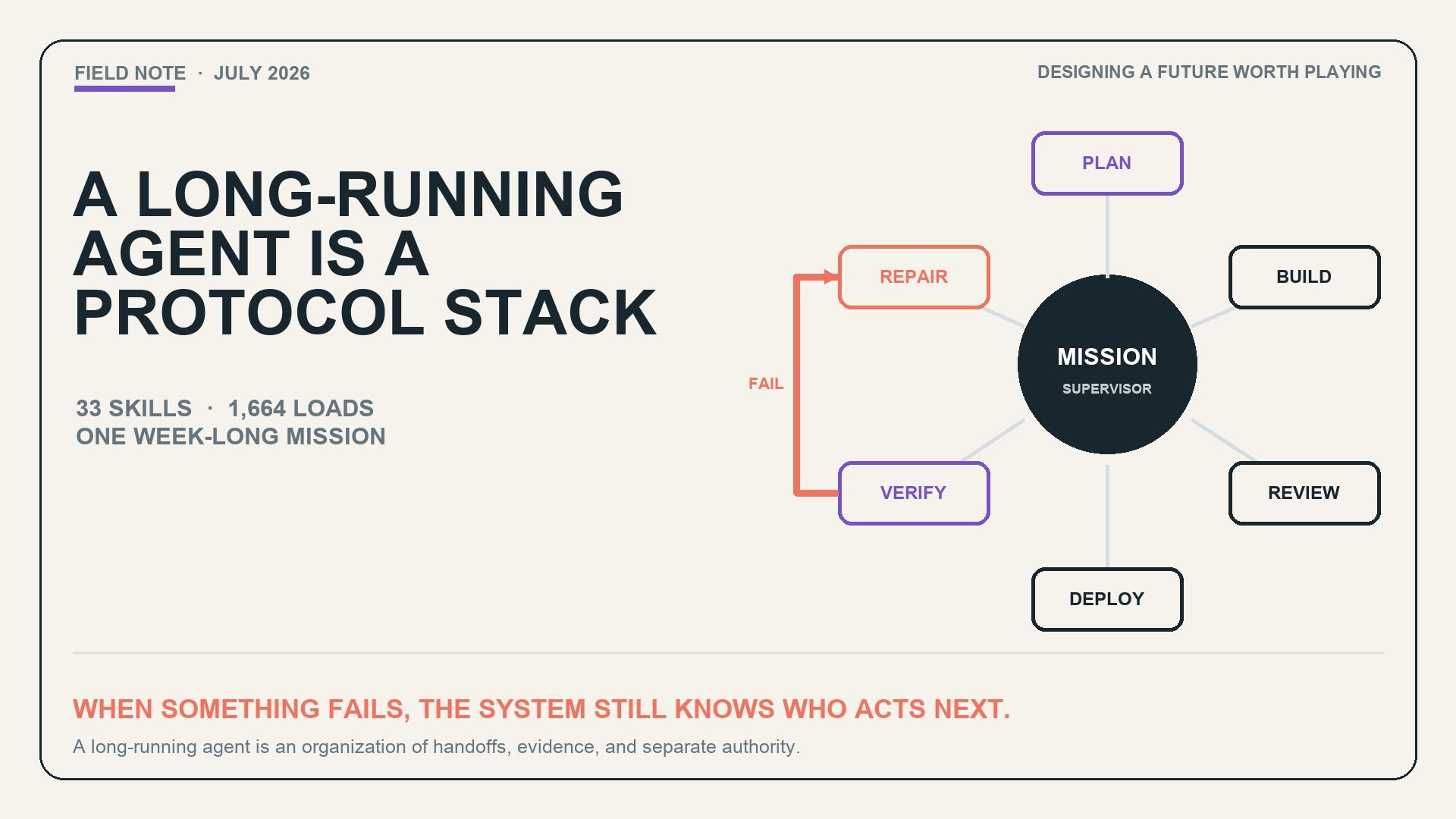
After auditing the skills behind my longest Codex mission, I found that autonomy came from handoffs between planning, building, debugging, review, deployment, and independent verification—not from one agent or one prompt.